No products in the cart.
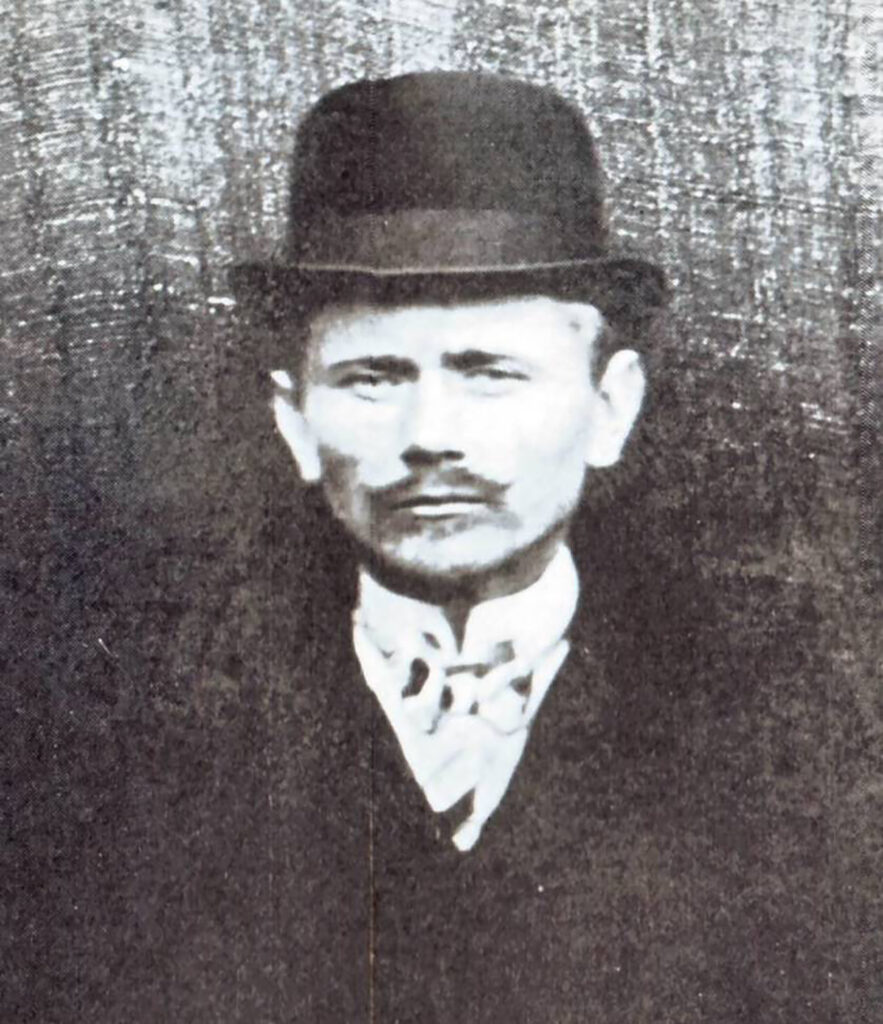
Edward Leedskalnin was an eccentric, mysterious man with a keen scientific intellect who lived purposefully. He was a stonemason whose accomplishments still baffle people today.
Born January 12, 1887, in Riga, Latvia, in northeastern Europe, little is known of Ed’s early childhood except that he grew up with modest means and received a primary education in Sakumskola school (Latvian for elementary). He learned the trade of stonemasonry from his family in Latvia.
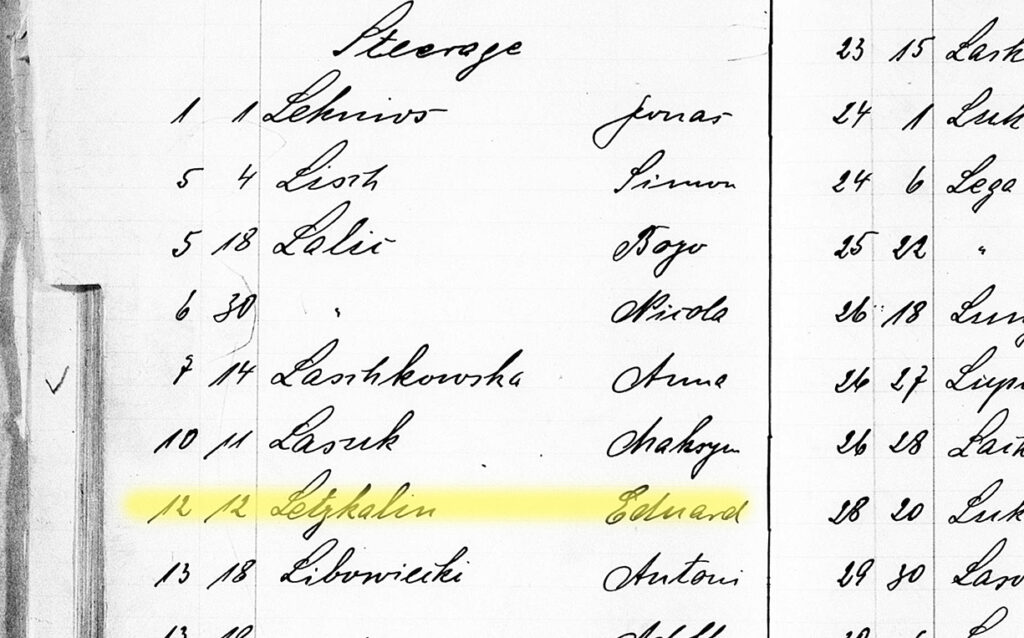
He was engaged to his Sweet Sixteen; however, she had second thoughts and broke their engagement. Heartbroken, Ed emigrated to the United States and traveled to the Port of Hamburg in Germany, where he boarded the SS Pennsylvania. According to the Ship’s Manifest, Ed left on the SS Pennsylvania on March 23rd, 1912, traveling in the steerage class, and arrived in New York on April 6th. Upon arrival, Ed’s immigration paperwork was processed through Ellis Island. According to these documents, he traveled to New Brunswick in British Columbia.
In 1913, it was documented that he left Cranbrook, British Columbia, and crossed the border into Eastport, Idaho, en route to Spokane. In 1916, we found Ed in Douglas County, Oregon, experiencing a logging boom where he was a laborer. In 1917, he was listed as an axe handle maker in Elkton, Oregon. Also, in 1917, the United States introduced its first-ever draft requirement, initially mandating male citizens aged 21-30 to register for military service. However, this age range was later expanded in 1918 to include men between 18 and 45 years old. Ed was among those who registered for the draft, submitting his application in Elkton and receiving his draft card on June 5, 1917, at age 29. According to the 1920 Census, Ed is listed as a lumber mill laborer in Reedsport, Oregon.
Believing he had tuberculosis, Ed moved to the warmer climate of South Florida. He met Ruben and Francis Moser, who took him in while he regained his health. Ruben Moser, a prominent landowner and businessman in Florida City, had previously overcome a severe health scare. This experience fostered a sense of compassion and inspired him to lend a helping hand to Ed.
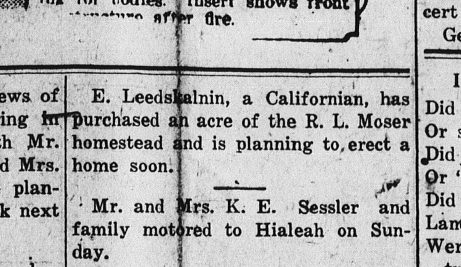
In February 1923, the Mosers sold Leedskalnin an acre of land measuring 209 feet by 210 feet for $10. Then, he decided to build a monument to his lost love. This would be the beginning of Ed’s most significant achievement, which was the crowning jewel, but how he built it remains a mystery.
Ed’s resourceful nature led him to harness the natural resources of South Florida, using oolitic limestone – a porous rock formed from coral fossils and shells – to construct his masterpiece. This locally sourced material proved ideal for his visionary project.
Working alone and at night, he quarried and sculpted tons of coral rock into an architectural and engineering landmark. He used tripod-mounted chain falls and basic block and tackle, a system of two or more pulleys with rope or cable threaded between them, and primitive tools he created from old car and truck parts. What makes this accomplishment so remarkable is that Ed not only devised a method to move these megalithic rocks without needing modern machinery or assistance from anyone, but he did so while standing just over 5 ½ feet tall and weighing approximately 120 pounds.
With meticulous craftsmanship, Ed hand-cut, carved, and sculpted these massive stones to create the breathtaking landmark known as “Ed’s Place.”
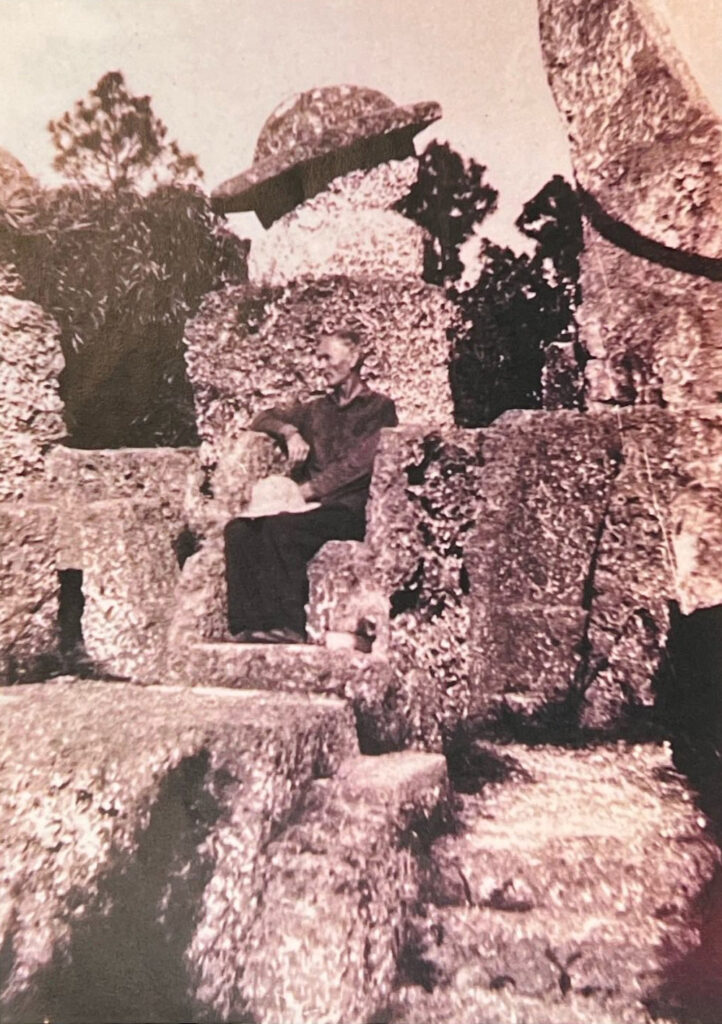
Using coral harvested from the local landscape, Ed created an astonishing array of stone sculptures and furniture pieces distinguished by their natural striations and layered textures. In addition to his living quarters, highlights of his collection include the iconic original carved rocking chair, the heart-shaped table and chairs, the reading room, the half-moon crescent, the moon fountain, and the obelisk.
Ed was a social person who immersed himself in the community. He was a member of the Redland District Chamber of Commerce. In the late 1930s, he welcomed visitors far and wide, offering guided tours for just 10 cents per person and hosting numerous events catered towards children that showcased his extraordinary creation.
In 1935, Ed decided to move his rock home and, by 1936, purchased 10 acres north in Modello along US1. Ed believed his unique home, an income-generating attraction, could draw more visitors to the new location. Ed’s move was not immediate, and he continued to host events at the original site. In 1937, Ed’s Place was featured on the front page of the Redland District News as an attraction for the Dade County Tropical Fair.
In May 1939, Ed began clearing the land at the new site to prepare for the relocation of his intricate rock sculptures. This was documented in July in the Redland District News with the headline “Ed Is Doing a Colossal Job of Moving But Wants No Help, Thank You.”
However, Ed didn’t drive, so he enlisted the help of a nearby farmer, Bob Biggers, who had a heavy-duty trailer that could handle tons of coral sculptures. They made a deal for hauling these heavy rocks to make the move. According to an affidavit dated April 5, 1955, by Mrs. C.U. Barnes, she states, “He moved all of the rock objects alone from Florida City. He would put them on a big trailer and then have my brother, Bob Biggers, come and pull them to the present location. Then he would tell Bob, “Go on now, for I don’t want anyone to bother me while I work.” Ed loaded and unloaded two to four stone pieces simultaneously while Bob drove the trailer back and forth. Ed continued to work alone and at night, moving the massive stones, with the tallest measuring 23 feet tall and the heaviest weighing over 21 tons. It took years to complete the move.
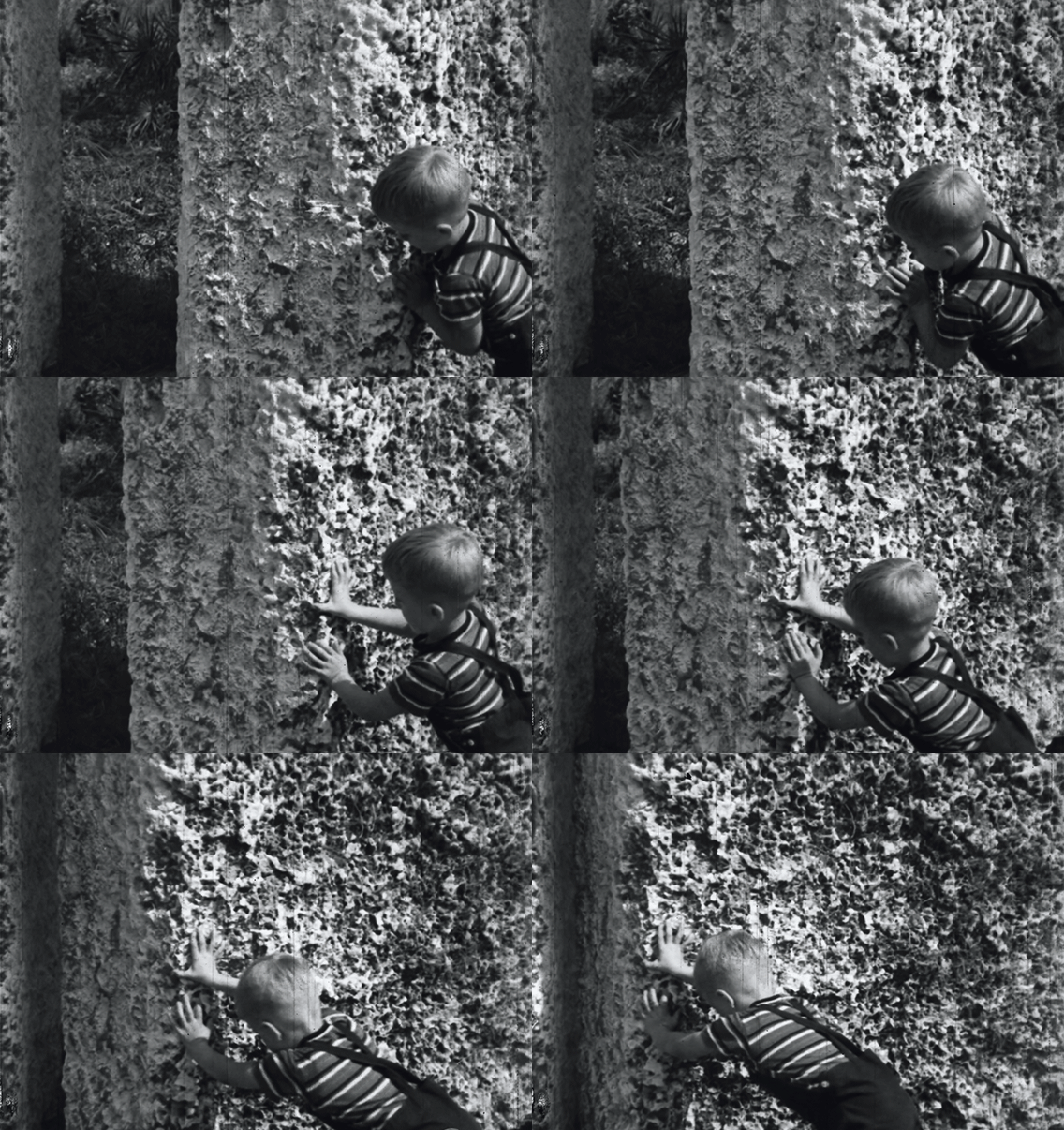
Ed continued to sculpt and build on his new property in Homestead, which was referred to as Rock Gate. Ed constructed a 9-ton gate that revolved with the slightest push of your hand. This was one of the greatest mysteries until the gate stopped working in 1984, causing six men and a crane to dismantle the structure for repair and reveal one of Ed’s many secrets. Ed had bored a hole through the solid coral rock slab that composes the nine-ton gate from top to bottom perfectly centered and inserted a metal shaft balancing the stone on an old truck bearing so perfectly that it turned with the slightest push. What caused it to stop working was the bearing had rusted out.
Ed credited his monumental achievement to a deep understanding of weight, leverage, and the secrets of the ancient pyramid builders. He also developed pioneering applications of magnetism, which Ed used daily.
Ed published copious amounts of written works, which he sold, on magnetism. His works on electricity and magnetism featured experiments to empower others to tap into and utilize this energy.
Ed’s work was never done. He continued construction over the next 28 years until his death in 1951. Even in death, Ed’s unwavering dedication and ingenuity to his craft still influence people to this day. Scientists and engineers are still perplexed as to the ins and outs of how he did what he did—in short, the impossible. His influences can also be seen across all genres of pop culture, in music, television, art, and literature.
We use cookies to improve your experience on our site. By using our site, you consent to cookies.
Manage your cookie preferences below:
Essential cookies enable basic functions and are necessary for the proper function of the website.
You can find more information in our Policies and Disclaimers and .